Wine and bar cabinets, designed around your collection
Wet bars, dry bars and bottle walls planned around what you pour and what you keep, then built to measure in our North Las Vegas factory.
Installed by our own crew across the Las Vegas Valley. In Los Angeles and Orange County, we design and build, and your licensed contractor installs.
- 01
Panel-ready appliances
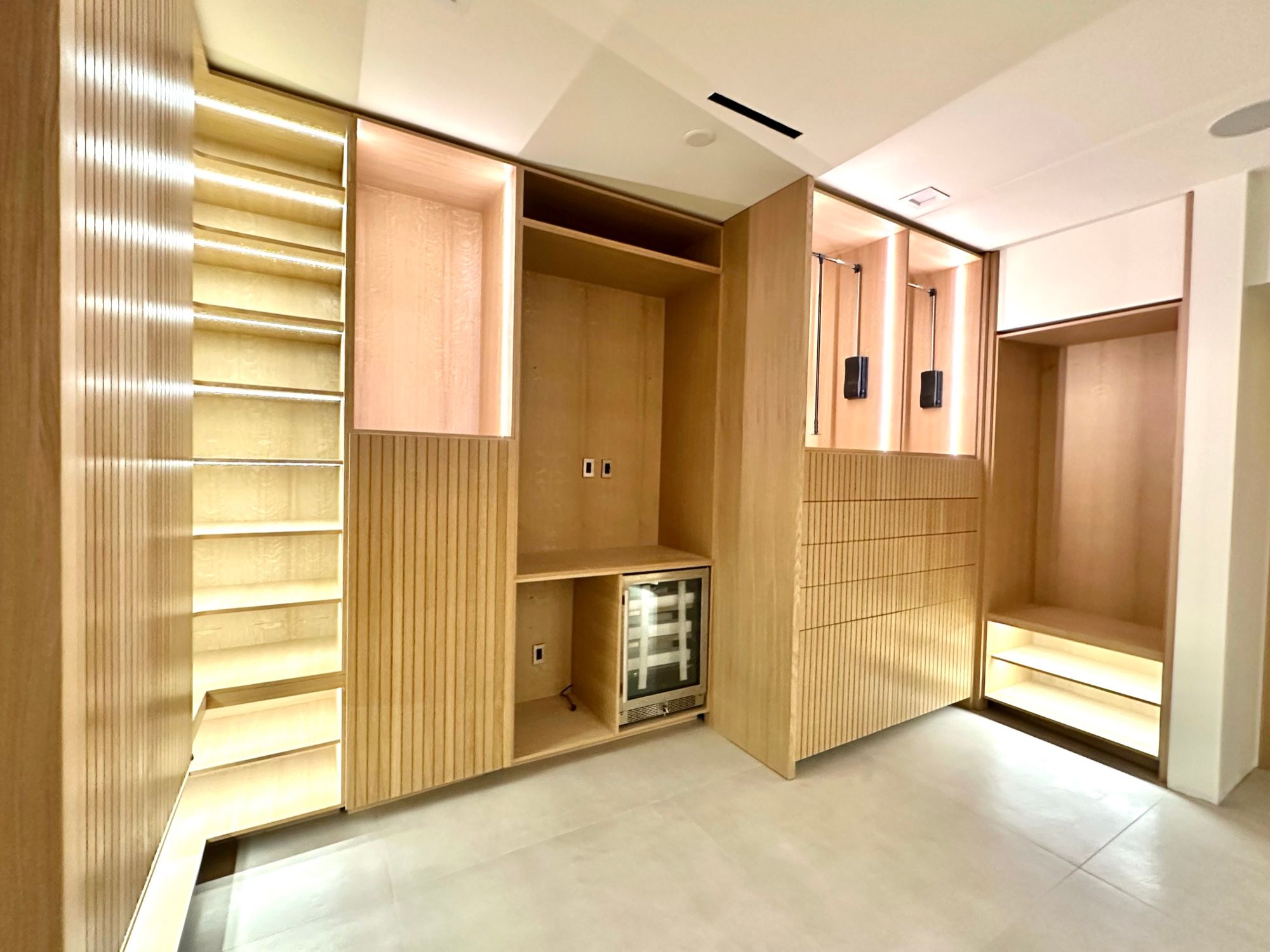
Beverage fridges, wine coolers and ice makers can take cabinet panels so they match the run instead of breaking it.
- 02
Lit glass display
Glass-front cabinets with integrated LED lighting show bottles and stemware without turning the bar into a store shelf.
- 03
Storage by bottle type
Cubbies, cradles and label-forward racks are mixed to fit the bottles you buy, from standard 750s to larger formats.
- 04
Wet or dry, planned early
We lay out sink bases, appliance openings and countertop overhangs with your plumber and fabricator on the same drawings.
- 05
Honest about cellars
Cabinetry is not climate control. We say clearly what a bar cabinet can do for wine and what a true cellar needs from others.
What custom wine and bar cabinets do well
A home bar is a small kitchen with more glass and less cooking. Custom wine and bar cabinets let every opening fit its purpose: a fridge opening to the appliance’s exact spec, a cubby to a bottle diameter, a shelf to the height of your tallest glass. We build them in our own factory for homes in Las Vegas and Southern California, with the same boxes, doors and finishes as our kitchens.
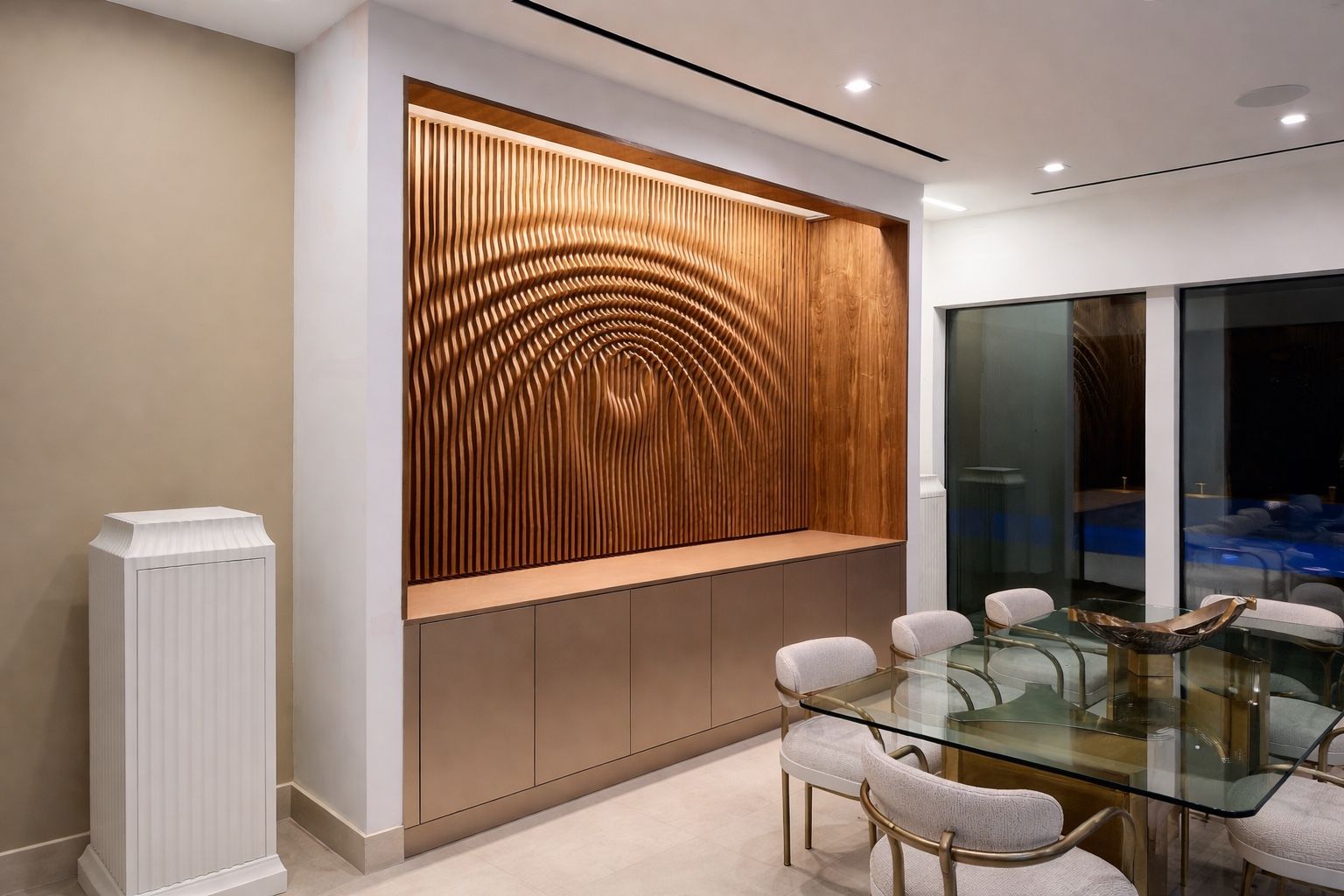
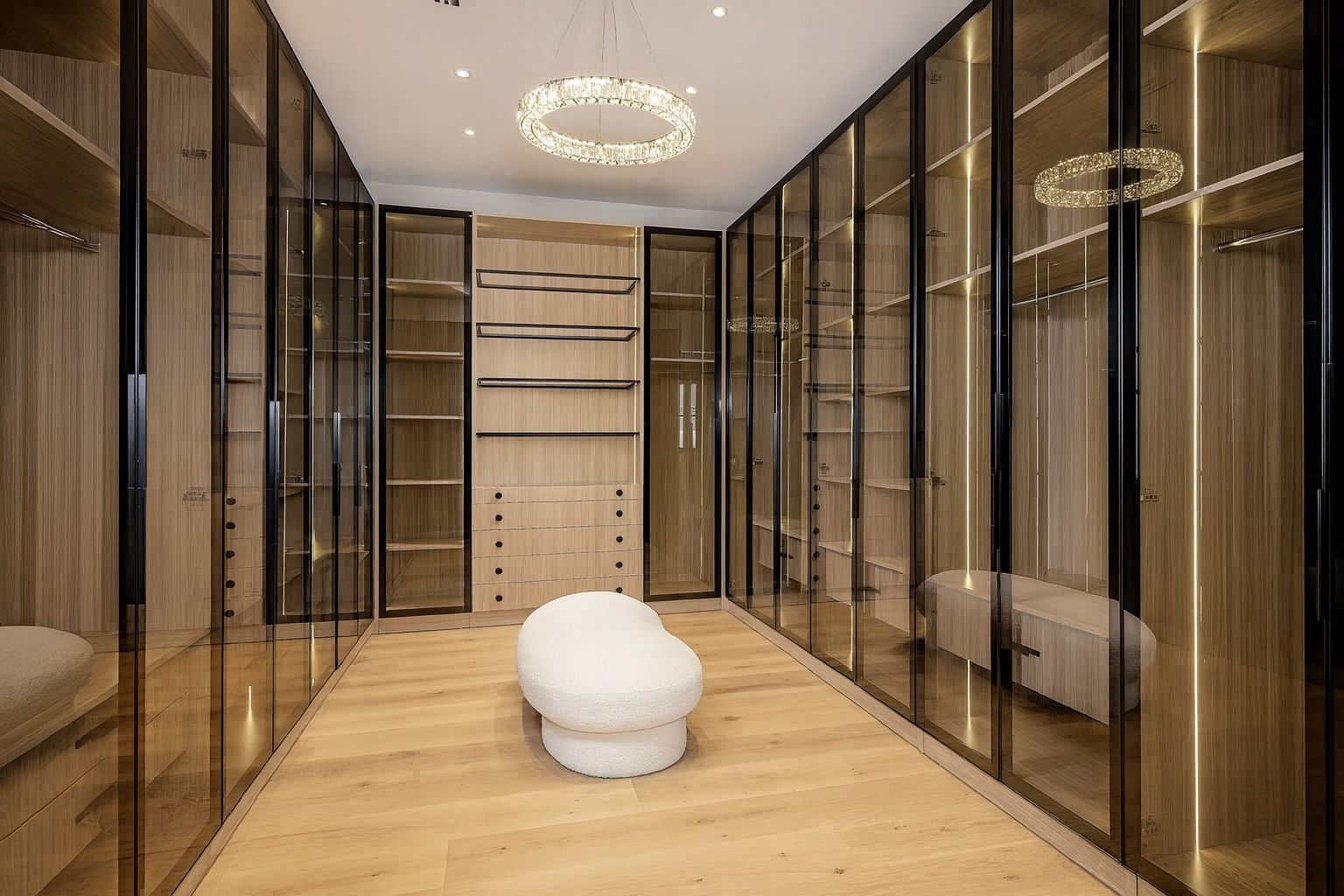
Bars show up in a lot of places: a great room wall, a butler’s pantry between kitchen and dining, a media room, or even a dressing room, like the white oak suite in our gallery with a built-in beverage fridge.
Wet bars, dry bars and appliances
Wet bar. A sink makes a bar far more useful, but it adds plumbing, a drain and a sink base sized to the bowl. Plumbing is by your plumber. We plan the sink base so supply lines, drain and any filter fit inside.
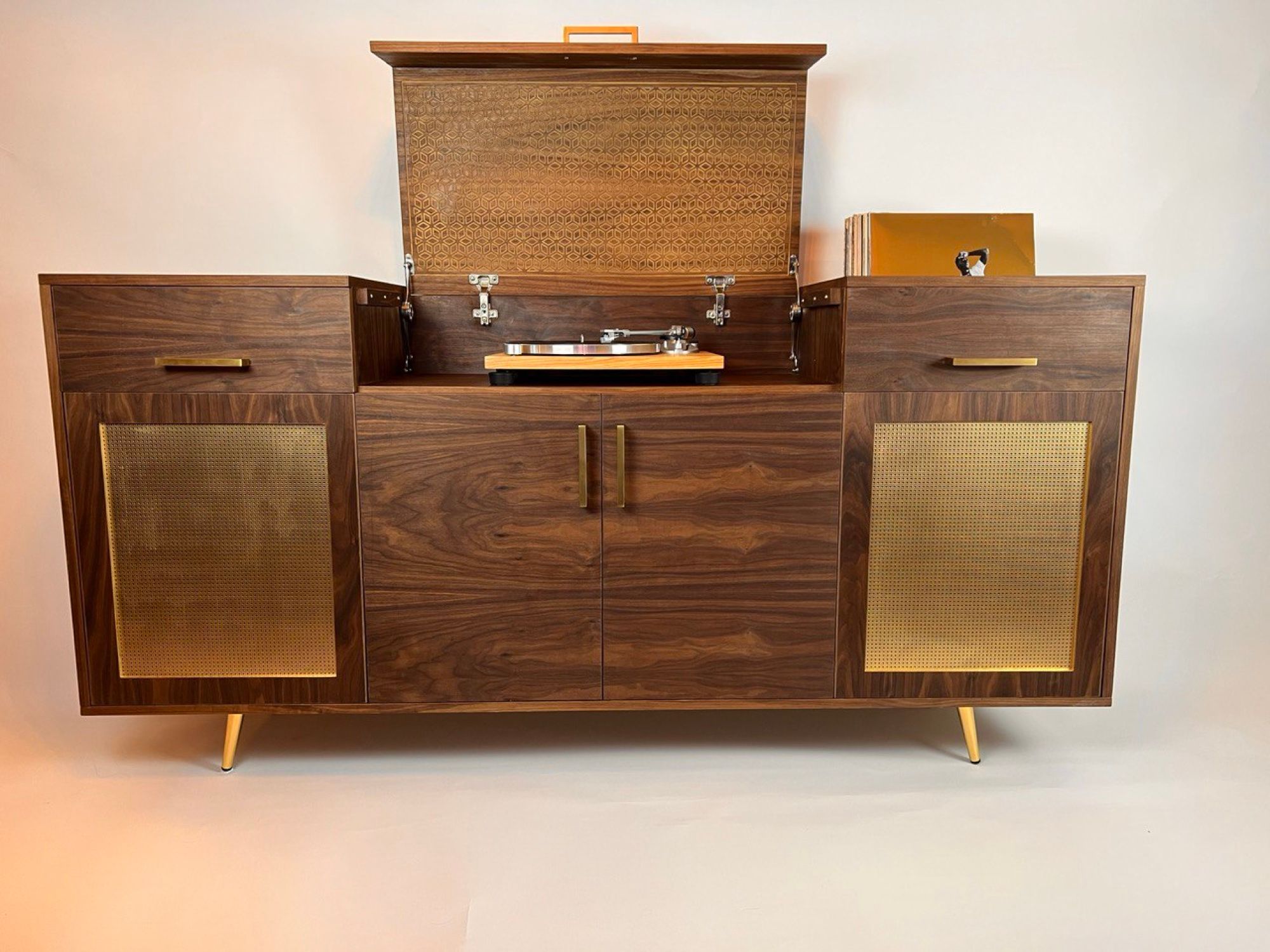
Dry bar. No sink means fewer constraints on location. It suits a credenza-style bar in a living or dining room.
Panel-ready appliances. Beverage fridges, wine coolers and ice makers can take cabinet panels so the run reads as cabinetry. Undercounter units usually vent at the front, and that grille has to stay open. Many ice makers also need a floor drain or a drain pump. Pick the models early. We build openings, panels and hinges to each manufacturer’s installation guide.
Glass-front display and bottle storage
Glass-front doors with integrated LED lighting are the visual center of most bars. A few points that make them work:
- Light inside the case. Lighting along the shelf fronts or sides shows labels and stemware. Lighting only at the top leaves the lower shelves dark.
- Glass shelves or wood shelves. Glass shelves let light reach the bottom. Wood shelves give a warmer look and carry more weight.
- Glass type. Clear, low-iron, reeded or tinted glass changes what you see inside. The glass itself comes from a glass supplier, and we build the doors and frames around it.
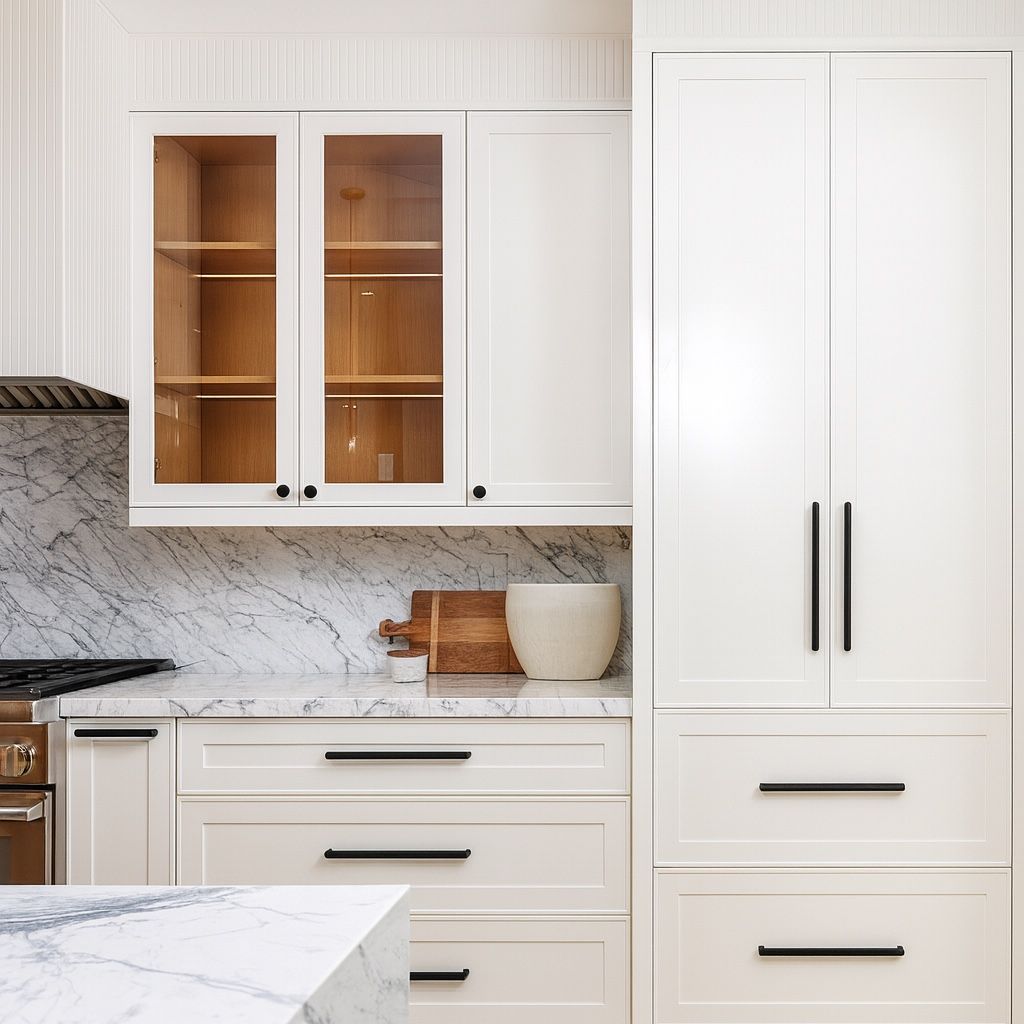
Our white shaker kitchen with oak-lined glass uppers and the white oak display cabinet show two ways to handle open and glazed display.
Bottle storage formats. Most bars mix two or three of these:
- Cubbies and diamond bins. Efficient bulk storage. Bottles lie on their sides, which keeps corks wet.
- Cradles. Individual slots that hold each bottle and make it easy to pull one without disturbing the rest.
- Label-forward display. Bottles angled or presented front-facing so labels are visible. Best for a few special bottles.
- Case storage and liquor pull-outs. Deep drawers for full cases, and pull-outs that bring spirits and mixers to the front.
Standard cubbies are sized to 750 ml bottles. Magnums and odd shapes need their own openings, so tell us what you collect.
Wine cellars: what cabinetry can and can’t do
A wine cellar is a climate-controlled room, not a cabinet. It needs insulation, a vapor barrier on the warm side of the walls, a sealed door and a dedicated cooling system sized for the space. Those are designed and installed by others, such as your builder and a cooling specialist. We do not supply them. Once that room is built, wood racking and cabinetry for it can be designed in. For most bars, a wine cooler is the practical way to keep bottles at cellar temperature.
Cost and process
Cost drivers. Length of the run, wood and finish, the amount of glass and lighting, the number of appliances and panels, and specialty racking all affect price.
The process. A designer visits, measures and asks what you pour and store. You get drawings and a fixed, itemized quote. We build the cabinets in our factory and our own crew installs them. A bar often shares a wall with a media center, so see our built-ins and entertainment centers, or extend the bar into the kitchen with custom kitchen cabinets.
Display and beverage cabinetry
Full gallery →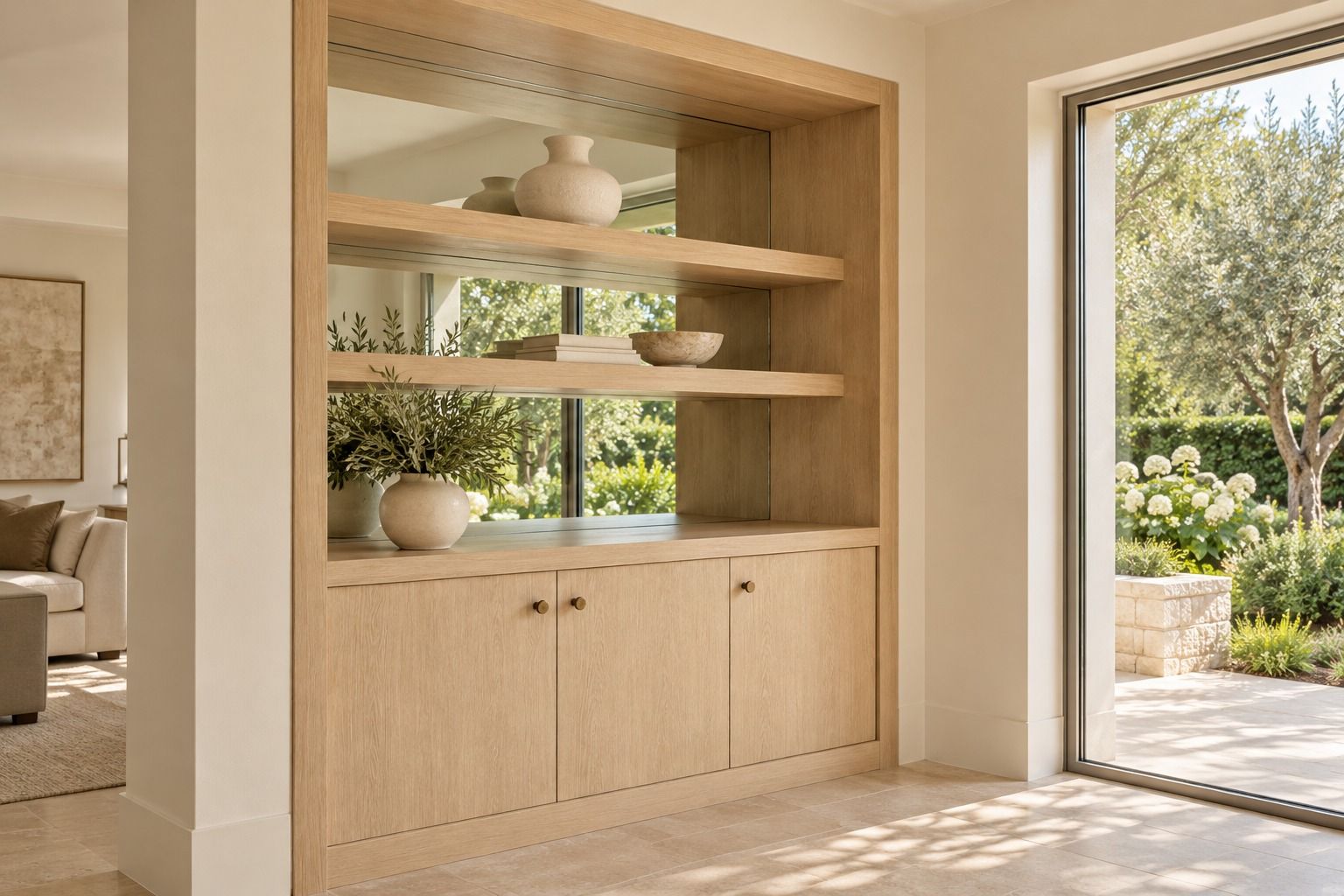
Good questions.
What is the difference between a wet bar and a dry bar?
A wet bar has a sink, so it needs water supply and a drain run by your plumber. A dry bar has no sink, which makes it simpler to place almost anywhere, but you'll carry glasses to the kitchen to wash them.
Can a wine cooler or ice maker be hidden behind a cabinet panel?
Yes, if the appliance is sold as panel-ready. Choose the model before final drawings, because each one has its own panel size, weight limit, hinge and ventilation requirements that we build to.
Can you build me a wine cellar?
We build the racking and cabinetry, but a true cellar also needs an insulated room, a vapor barrier and a dedicated cooling system, which are designed and installed by others. If that room is prepared, racking for it can be designed in.
Is a glass-front cabinet a good place to store wine long term?
Not for aging. Bottles in a regular cabinet sit at room temperature and, behind glass, in light. Use the display for bottles you'll open soon and keep long-term bottles in a wine cooler or cellar.
Do I need to buy appliances before the design visit?
Not before the visit, but the models should be chosen before drawings are final. Opening sizes, panel details and vent locations all depend on the exact appliance.
Who supplies the bar countertop and sink?
The countertop is made by your stone fabricator and the sink and faucet are installed by your plumber. We build the cabinets to support both, including any overhang for seating.
Wine & Bar Rooms near you
Related services
Your cabinets start with one free visit.
We measure, design and price your project on-site. No cost, no pressure.